

Following a string of high stakes performances at the Congress National Qualifier and recent tournaments at Topeka High, the MHS forensics team is proving that success in speech and debate is about much more than just the hardware, it’s about finding a voice and a community.
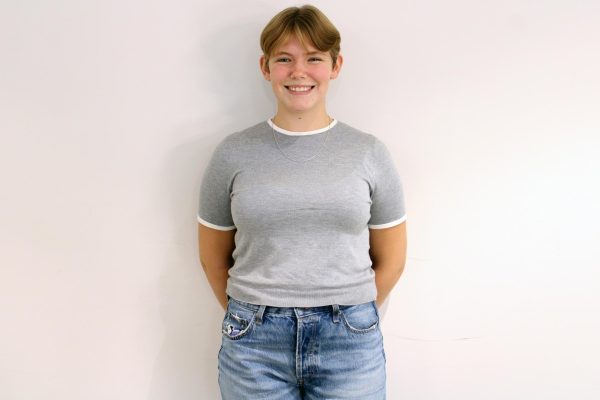
“I’ve learned that you have to enjoy every part of your tournament and not let the nerves ruin what could be an amazing experience that you’ll remember forever,” freshman novice Katalina Martinez said.
In the world of forensics, “Congress” is a high-energy game of strategy and persuasion where students act as senators or representatives.
“Congressional debate is a type of debate in which about 20 students follow congressional rules and procedures to work on passing or failing mock legislation,” senior Ayla Price said.
Unlike other forms of debate that target a single judge, the goal is to persuade the entire room.
“Our main goal is to convince the senators in our chamber,” Martinez said, “which makes congressional debate way more interactive.”
The topics are as heavy as they are diverse, ranging from deprivatizing prisons to rejoining nuclear arms treaties. Price noted that preparing for these sessions requires an immense amount of research, as schools often write their own bills.
“I just made sure I understood what each bill did so I was ready to debate it,” Price said.
The hard work paid off at the Congress National Qualifier, where sponsor and teacher William Soper saw the team achieve significant milestones.
“Wyatt Adams was second and Ayla Price was fourth overall,” Soper said, “All of the top six qualify to the National Speech and Debate Association National Tournament in June, so both Ayla and Wyatt qualify.”
For Price, the journey to a second consecutive national qualification involved navigating tactical “blocking” from other schools.
“The most challenging part is having to speak on bills I don’t want to talk on so that I can either let my teammates give speeches they want or block other schools from talking,” Price said. “The strategy is always changing.”
While the debaters were navigating policy, other members of the squad found their own rhythm at the Topeka High tournament. Senior Olivia Howe walked away as a state qualifier in both Domestic Extemporaneous Speaking and Informative Speaking. In her Informative speech, Howe balanced the structured topic of authoritarianism with humor and unique visual aids, including a stuffed eagle.
“I had to walk a delicate line between entertaining my audience and respecting the gravity of the subject,” Howe said.
Her success in Extemporaneous speaking came down to authoritative delivery and relatable analogies.
“Being funny and relatable, defining jargon and unfamiliar terms, and explaining why the topic is relevant to the judge are all important ingredients for success,” Howe said.
Despite the pressure of national bids and state qualifications, the team remains grounded in the social side of the activity. For Martinez, a highlight of the season was gathering with students from other schools for games like “zip zap zop” while waiting for awards.
“I’ve learned that you have to enjoy every part of your tournament and not let the nerves ruin what could be an amazing experience,” Martinez said.
Howe echoed this sentiment, noting that her favorite part of the season was this meet “not because of the state qualifications, but because of the memories.”
As the team prepares for the national stage in June, the message to newcomers is clear.
“It seems scary at first, but just have fun with it and you’ll do good,” Price said. “It’s not about the medals, it’s about the community.”